Evaluating Mambality: A Practical Guide to Vintage Bold Display Typography
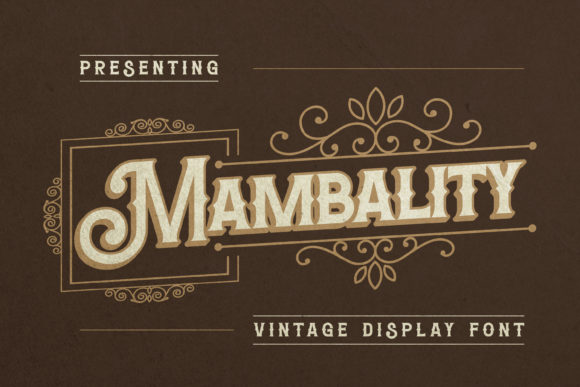
Selecting the right typeface is rarely a binary decision. It involves weighing aesthetic intent against technical constraints, audience expectations, and production workflows. Among the myriad of display fonts available for modern design projects, Mambality has emerged as a distinct option for designers seeking a specific vintage aesthetic without sacrificing legibility or ease of use. This font is characterized by its thick letterforms, bold weight, and retro-inspired styling, making it particularly suited for headlines, posters, and branding elements that require immediate visual impact.
For professionals aged 20 to 50 who are evaluating typography options, understanding the nuances of a font like Mambality requires looking beyond surface-level appearance. It involves assessing how the font behaves in different contexts, how accessible its special characters are, and whether it aligns with the broader goals of a project. This analysis explores the characteristics of Mambality, compares it within the context of vintage display fonts, and provides a framework for determining when this tool fits your creative needs.
Defining the Aesthetic: What Makes Mambality Distinct?
Mambality is categorized as a display font, which means it is designed to be read at large sizes rather than in body text. Its primary strength lies in its ability to command attention through sheer presence. The letterforms are notably thick, creating a heavy visual weight that anchors a composition. This thickness is not merely a stylistic choice but a functional one, ensuring that the text remains readable even from a distance or on low-resolution screens.
The "vintage styled" aspect of Mambality refers to its adherence to mid-century graphic design principles. You will often see influences of slab serifs, condensed proportions, and slightly irregular edges that mimic the texture of old print media. However, unlike some distressed fonts that rely heavily on noise or degradation, Mambality maintains a clean vector structure. This balance allows it to feel nostalgic yet contemporary enough for modern digital interfaces.
One of the most significant technical features of Mambality is its encoding method. It is PUA encoded. To understand why this matters, it is helpful to look at how fonts handle special characters. Standard Unicode encoding assigns specific code points to common letters and symbols. However, fonts with extensive swashes, ligatures, or decorative variants often run out of space in the standard allocation. PUA (Private Use Area) encoding allows designers to access these additional glyphs—such as ornate swashes, alternate character shapes, and decorative flourishes—by assigning them to unused slots in the character map.
The Practical Advantage of PUA Encoding
For the average user, PUA encoding can sometimes seem like a technical hurdle. However, for experienced designers, it offers a streamlined workflow. Instead of searching through multiple font files or manually constructing complex ligatures using layer effects, a designer can access all glyphs and swashes with ease. This accessibility reduces friction in the creative process, allowing for rapid iteration and experimentation. When you add Mambality to your favorite creations, the ability to toggle between standard bold forms and elaborate swashes without leaving the text box is a significant efficiency gain.
Comparative Analysis: Mambality vs. Other Vintage Display Options
When evaluating Mambality, it is useful to place it in conversation with other categories of vintage and bold display fonts. The market is saturated with options ranging from hand-drawn brush scripts to rigid industrial sans-serifs. Understanding where Mambality sits in this landscape helps clarify its best-fit situations.
- Hand-Drawn Script Fonts: Many vintage styles attempt to replicate calligraphy or brush strokes. While these offer organic charm, they often lack the structural rigidity required for strong headline hierarchy. Mambality, by contrast, provides a solid, geometric backbone. It is better suited for designs that need to convey stability and authority alongside nostalgia.
- Distressed and Grunge Fonts: Some vintage fonts achieve their look by applying texture overlays or eroding the edges of the letters. These fonts can become difficult to read at smaller sizes and may not reproduce well in certain printing processes. Mambality’s clean vector paths ensure that it scales cleanly across mediums, from web banners to large-format billboards, without losing integrity.
- Standard Slab Serifs: Classic slab serifs like Rockwell or Clarendon are timeless but can feel generic. Mambality differentiates itself through its specific proportion and the inclusion of unique swashes via PUA encoding. It offers more personality and variation than a standard slab serif, providing designers with more tools to create custom looks without needing to combine multiple typefaces.
Evaluating Strengths and Tradeoffs
No single typeface is a universal solution. Mambality excels in specific scenarios but comes with inherent tradeoffs that designers must consider during the planning phase.
Strengths
The primary strength of Mambality is its versatility within a niche. It bridges the gap between retro aesthetics and modern clarity. Its bold weight makes it ideal for:
- Event Posters: The thick letterforms ensure visibility from afar, while the vintage style sets the tone for concerts, festivals, or theatrical performances.
- Brand Logos: For brands aiming to evoke heritage, craftsmanship, or reliability, Mambality provides a sturdy foundation. The swashes allow for logo variations that can be used in secondary branding materials.
- Social Media Graphics: In an environment dominated by small screens, bold typography cuts through the noise. Mambality’s high contrast and clear shapes render well on mobile devices, ensuring messages are absorbed quickly.
Limitations and Considerations
Despite its strengths, Mambality is not appropriate for all applications. As a display font, it should generally not be used for long-form body copy. Attempting to set paragraphs in Mambality will result in poor readability and visual fatigue. Additionally, because it is PUA encoded, there is a minor compatibility consideration. If you are handing off files to clients or developers who do not have the font installed or know how to navigate the PUA character map, there is a risk of text substitution. Always embed fonts or provide fallback options when working in collaborative environments.
Decision Factors: When to Choose Mambality
Choosing the right typeface is ultimately about solving a communication problem. Mambality is the right choice when your project requires a strong, memorable voice that leans into historical design cues without feeling dated. It is particularly effective when you want to avoid the clichés of overused modern minimalist fonts or the unpredictability of handwritten scripts.
Consider choosing Mambality if:
- You need a headline font that carries significant visual weight.
- Your brand identity benefits from a sense of tradition, solidity, or retro-cool.
- You value a workflow that allows for easy access to decorative variants without complex workarounds.
- You are designing for high-impact, short-duration viewing contexts like ads, banners, and titles.
Conversely, you may need another option if:
- Your project relies heavily on dense text or lengthy reading passages.
- The aesthetic calls for extreme delicacy or lightness, which Mambality’s bold weight cannot provide.
- You are working in a highly constrained technical environment where PUA encoding might cause rendering issues.
Practical Application and Workflow Tips
To get the most out of Mambality, integrate it thoughtfully into your design system. Because the font is bold and visually dominant, it pairs best with simpler, lighter typefaces for supporting text. A clean sans-serif or a subtle serif can provide the necessary contrast to let Mambality shine without overwhelming the viewer.
Experiment with the swashes provided through the PUA encoding, but exercise restraint. Using too many decorative variants in a single layout can create visual clutter. Reserve the swashes for key words or logos where you want to emphasize creativity. For general headings, the standard bold forms often provide a cleaner, more professional look.
Furthermore, pay attention to kerning and tracking. Due to the thickness of the letterforms, tight spacing can cause the letters to merge, reducing legibility. Generous tracking often enhances the vintage feel, mimicking the wide spacing found in classic poster design. Adding ample whitespace around Mambality headlines allows the bold shapes to breathe, increasing their overall impact.
Conclusion
Mambality represents a thoughtful intersection of vintage charm and modern utility. Its thick, bold letterforms and accessible PUA-encoded glyphs make it a valuable asset for designers looking to create impactful, retro-inspired visuals. By understanding its strengths, limitations, and ideal use cases, you can confidently add it to your toolkit. Whether you are crafting a brand identity, designing a promotional campaign, or simply exploring new typographic possibilities, Mambality offers a reliable and stylish solution that lets you focus on the outcome rather than the technical hurdles.