Choosing the Right Typeface: Why Fond Memories Stands Out for Casual Projects
In the vast landscape of digital typography, selecting the perfect typeface often feels like navigating a maze of conflicting priorities. Designers and content creators frequently face the challenge of balancing legibility with personality. While some projects demand strict adherence to corporate branding or academic rigor, others require a distinct shift in tone—one that feels approachable, warm, and unpretentious. This is where Fond Memories enters the conversation as a compelling option for those seeking to infuse their work with a relaxed atmosphere.
Understanding the specific niche a font occupies is crucial before committing to it for a long-term project. Fond Memories is not merely a decorative script; it is a display font engineered with an informal style and a casual vibe. Its design language speaks directly to audiences looking for authenticity rather than polish. When evaluating whether this typeface fits your current needs, it is helpful to look beyond its visual appeal and consider how it functions within different contexts, from social media graphics to personal branding materials.
Distinguishing Characteristics of Fond Memories
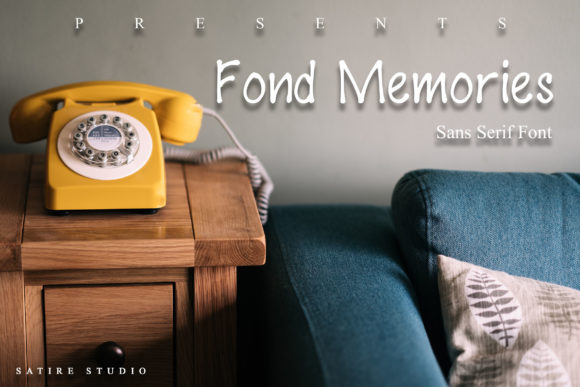
What sets Fond Memories apart from standard serif or sans-serif options is its inherent informality. The letterforms are crafted to mimic the fluidity of hand-lettering without sacrificing the structural integrity required for screen readability. Unlike rigid geometric fonts that can feel cold or distant, Fond Memories introduces organic curves and varied stroke weights that suggest a human touch. This characteristic makes it particularly effective for designs that aim to evoke nostalgia, warmth, or a sense of personal connection.
The "cool and casual" nature of the font does not mean it lacks sophistication. Instead, it redefines sophistication by prioritizing comfort over formality. In a digital environment saturated with uniform, algorithmic-looking text, Fond Memories offers a breath of fresh air. It breaks the monotony of standard web layouts, drawing the eye naturally to headlines, quotes, or key messaging points. For creators who want their content to feel less like a broadcast and more like a conversation, this font provides the necessary visual vocabulary.
Comparing Display Fonts to Standard Typefaces
When evaluating Fond Memories, it is essential to compare it against the broader categories of typography available to designers. Standard body text fonts, such as Roboto, Open Sans, or Georgia, are designed primarily for extended reading. Their high legibility at small sizes and neutral tones make them ideal for paragraphs and technical documentation. However, these fonts often lack the emotional resonance required for marketing headers or creative illustrations.
Fond Memories falls squarely into the display category. Display fonts are intended for short bursts of text—titles, logos, posters, and banners—where impact matters more than volume. The tradeoff here is clear: while Fond Memories excels at capturing attention in large formats, it is generally unsuitable for long-form body copy. Attempting to use it for extensive articles would likely result in reader fatigue due to the high visual noise of the irregular letterforms.
- Standard Body Fonts: Best for readability, information density, and neutrality. They fade into the background to let the content shine.
- Display Fonts (like Fond Memories): Best for emotional impact, brand voice, and immediate engagement. They demand attention and set the mood.
This distinction is vital for anyone making a decision about resource allocation. If your project requires conveying complex data or lengthy instructions, a standard typeface remains the superior choice. However, if the goal is to create a memorable impression or establish a friendly rapport with the audience, Fond Memories offers a distinct advantage over generic alternatives.
Evaluating Use Cases and Strategic Fit
To determine if Fond Memories is the right tool for your specific creation, one must analyze the context in which it will be deployed. The font's informal style suggests it thrives in environments where perfection is less important than personality. Consider scenarios where a brand wants to appear accessible rather than authoritative. A local bakery, a boutique lifestyle blog, or a community event flyer are prime examples where the casual vibe of Fond Memories aligns perfectly with the subject matter.
In contrast, industries that rely on trust through stability and precision—such as law, finance, or healthcare—might find the font too whimsical for primary communication. While it could be used sparingly for subheadings to add a touch of warmth, relying on it for core messaging could undermine the professional credibility required in those sectors. The decision often comes down to the desired psychological response from the viewer. Do you want them to feel reassured by structure, or invited by charm?
Furthermore, the versatility of Fond Memories extends to various digital platforms. On mobile devices, where screen real estate is limited, a strong display font can convey a message quickly without clutter. The unique character of the letters helps the text stand out even at smaller sizes, provided the hierarchy is managed correctly. Social media campaigns, in particular, benefit from this trait. Posts that utilize Fond Memories often achieve higher engagement rates because they break the visual pattern of the feed, signaling to the user that the content is curated and thoughtful.
Weighing Strengths Against Limitations
No single typeface is a universal solution, and acknowledging the limitations of Fond Memories is part of a responsible evaluation process. Its primary strength lies in its ability to convey a relaxed touch, but this same attribute can become a weakness if overused or misapplied. The informality that makes it charming can also be perceived as unprofessional in formal settings. Additionally, display fonts sometimes suffer from compatibility issues across different operating systems or browsers if not properly embedded or converted to web-safe formats.
Another consideration is the availability of weights and styles. Many modern sans-serif families offer a wide range of weights from light to black, allowing for nuanced hierarchy within a single font family. Fond Memories, being a stylistic display font, may have fewer variations. This limits the designer's ability to create subtle distinctions between headings and subheadings using only font weight. In such cases, pairing Fond Memories with a simpler, highly legible sans-serif for body text is often the most effective strategy. This combination leverages the strengths of both: the emotional hook of the display font and the functional clarity of the body font.
Cost and licensing are also practical factors to weigh. Some display fonts come with premium pricing or restrictive usage licenses. Before integrating Fond Memories into a commercial product, it is prudent to review the terms of service. Ensuring that the license covers the intended scope of use—whether it is for print, web, or merchandise—is a critical step in the decision-making workflow.
Making the Final Decision
Ultimately, choosing a font is a strategic decision that impacts the overall perception of a project. Fond Memories serves as a go-to choice for creations requiring a relaxed touch, but it should not be the default option for every situation. It is a specialized tool in the typographer's kit, best employed when the goal is to foster a sense of intimacy and ease.
For designers comparing options, the recommendation is to test the font in context. Create mockups that include both the headline and supporting body text. Observe how the informal style interacts with the rest of the design elements. Does it clash with the imagery? Does it enhance the message, or does it distract from it? Often, the answer becomes apparent only when the font is applied to actual content rather than just viewed in isolation.
If your project aims to connect with an audience on a personal level, bypassing the sterile feel of corporate templates, Fond Memories offers a viable path forward. It allows for creativity without sacrificing clarity, provided it is used within its intended parameters. By understanding its distinct characteristics and recognizing where it fits within the broader spectrum of typography, creators can make informed choices that elevate their work.
In the end, the success of any design relies on the harmony between form and function. Fond Memories brings a unique flavor to the table, one that is impossible to replicate with standard system fonts. Whether you are launching a new brand, designing a wedding invitation, or updating a blog header, considering the specific emotional goals of your project will guide you to the right typeface. For those seeking a cool, casual aesthetic that resonates with modern sensibilities, Fond Memories stands as a robust and appealing candidate.